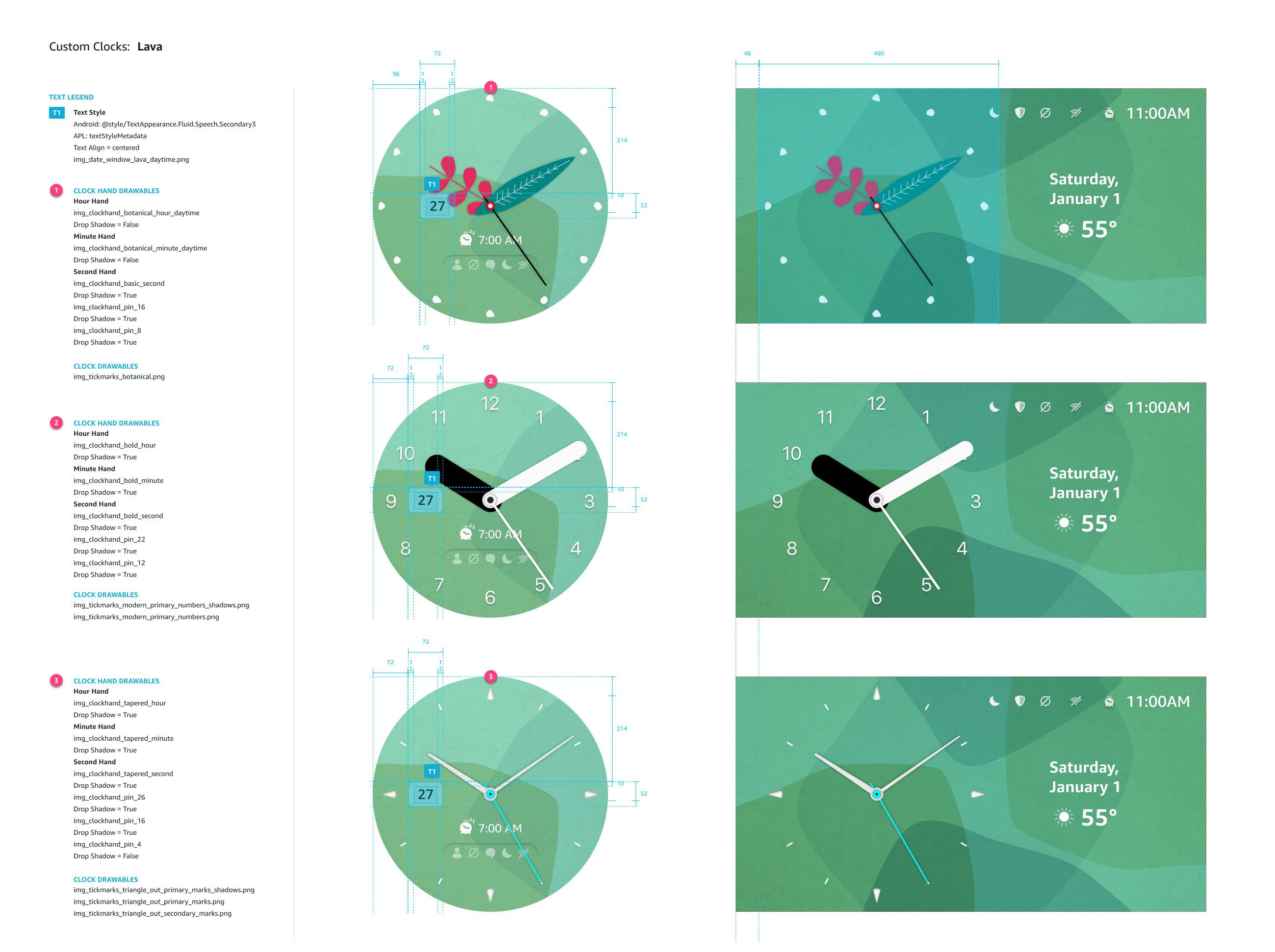
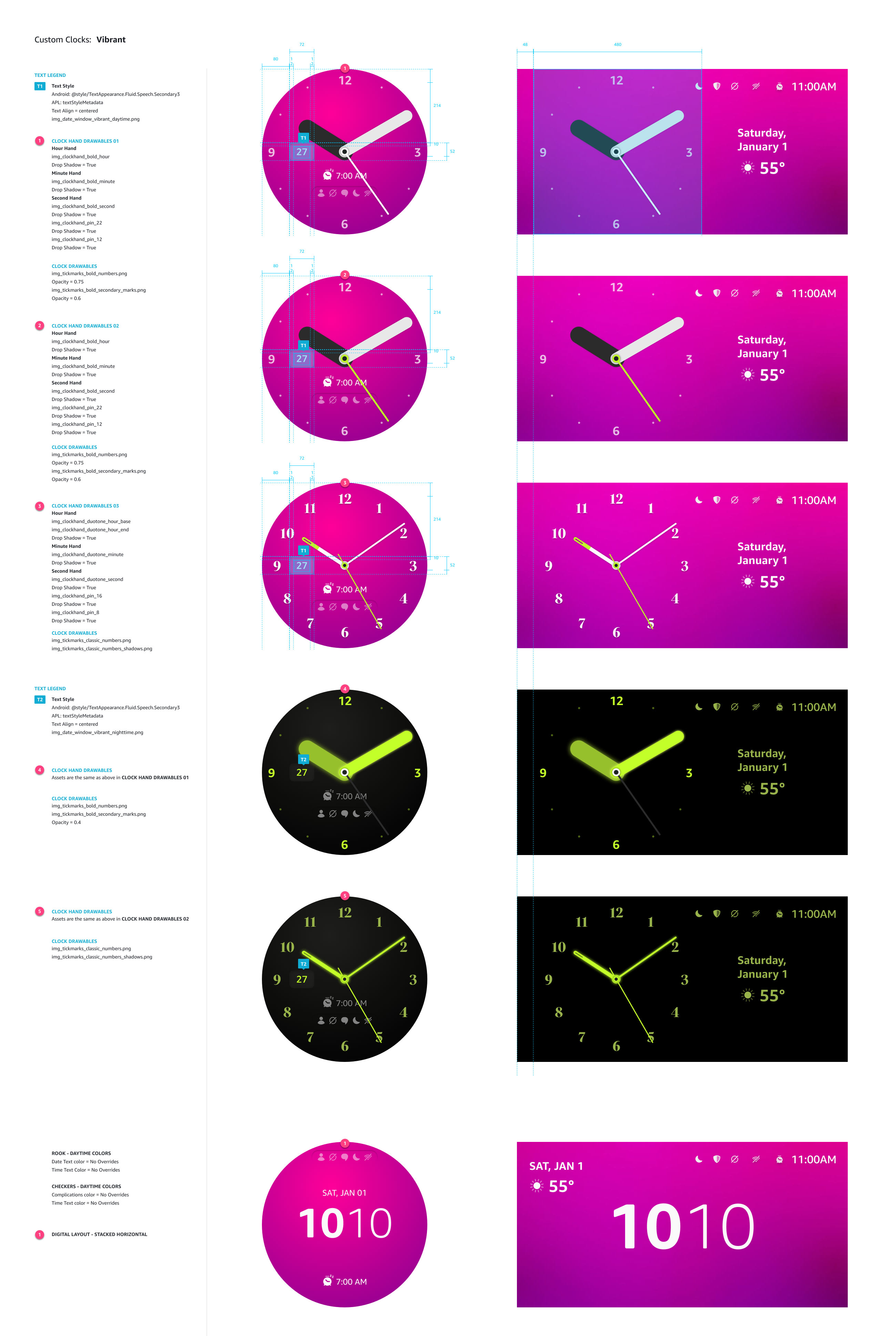
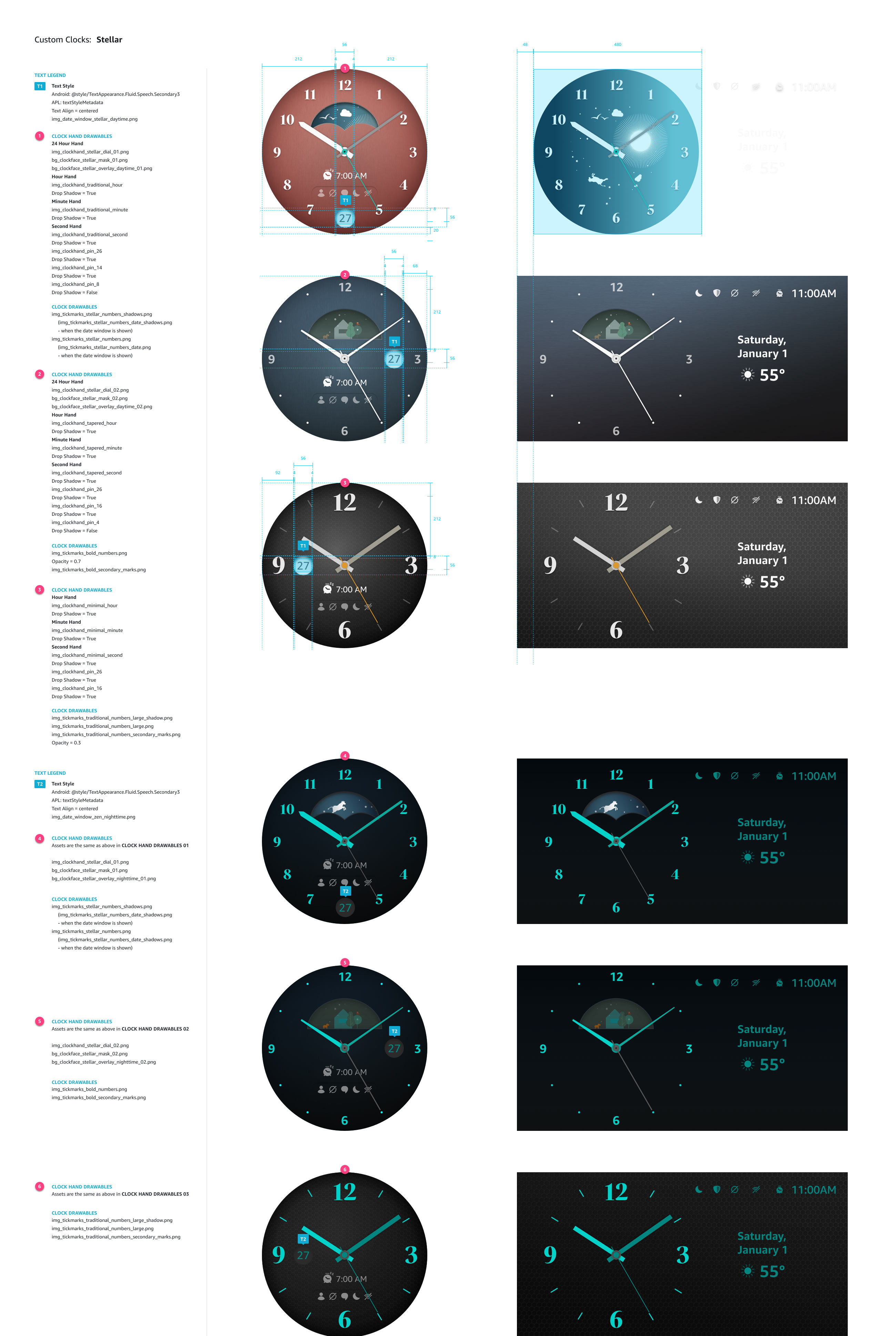
Within Amazon’s Devices & Design Group, our team of 9 system designers and technologists created, maintained, and owned the design systems for all of Amazon’s devices, including OOBE (Android), experience (APL), and legacy libraries. My focus was working with our CX teams to build and maintain feature-rich, streamlined systems and components that synched precisely with code. My scope was mainly within the Alexa core, Fire TV, and Echo family design systems.
Design systems build // System management
My role Sr system designer (L4)
Skills used
Systems thinking
System building
Complex components
UI design
Interaction design
Cross-function
System management
Echo design system
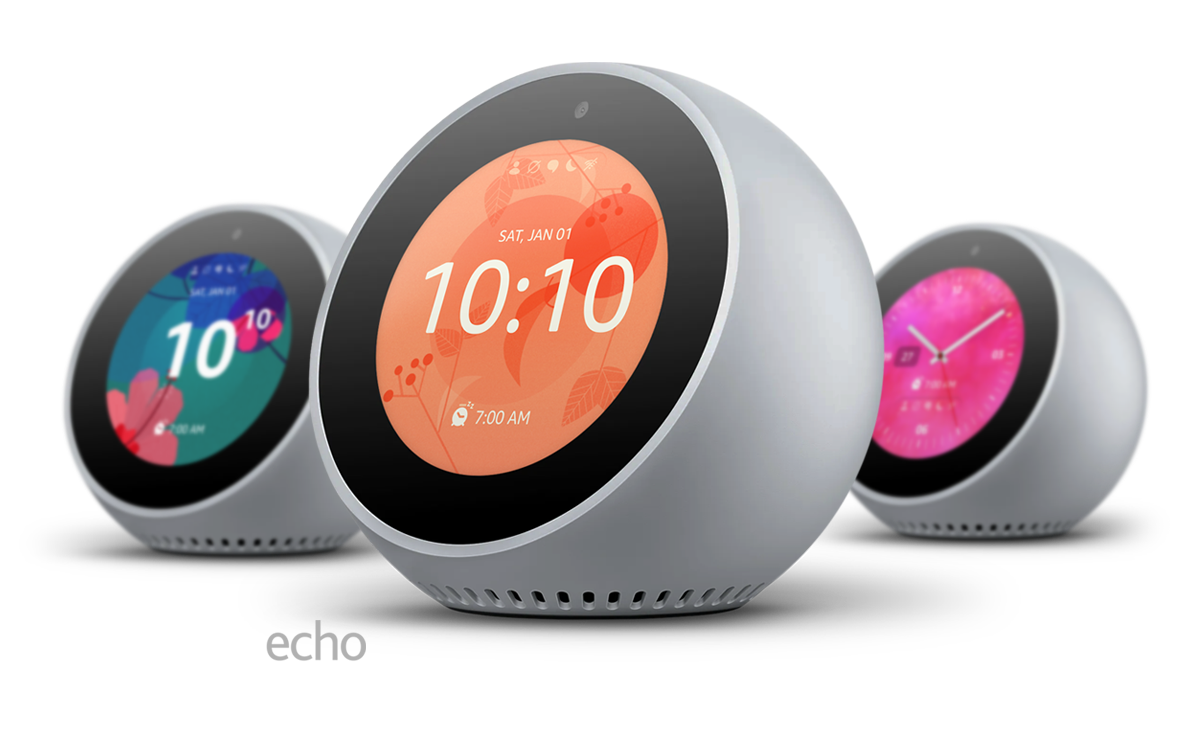
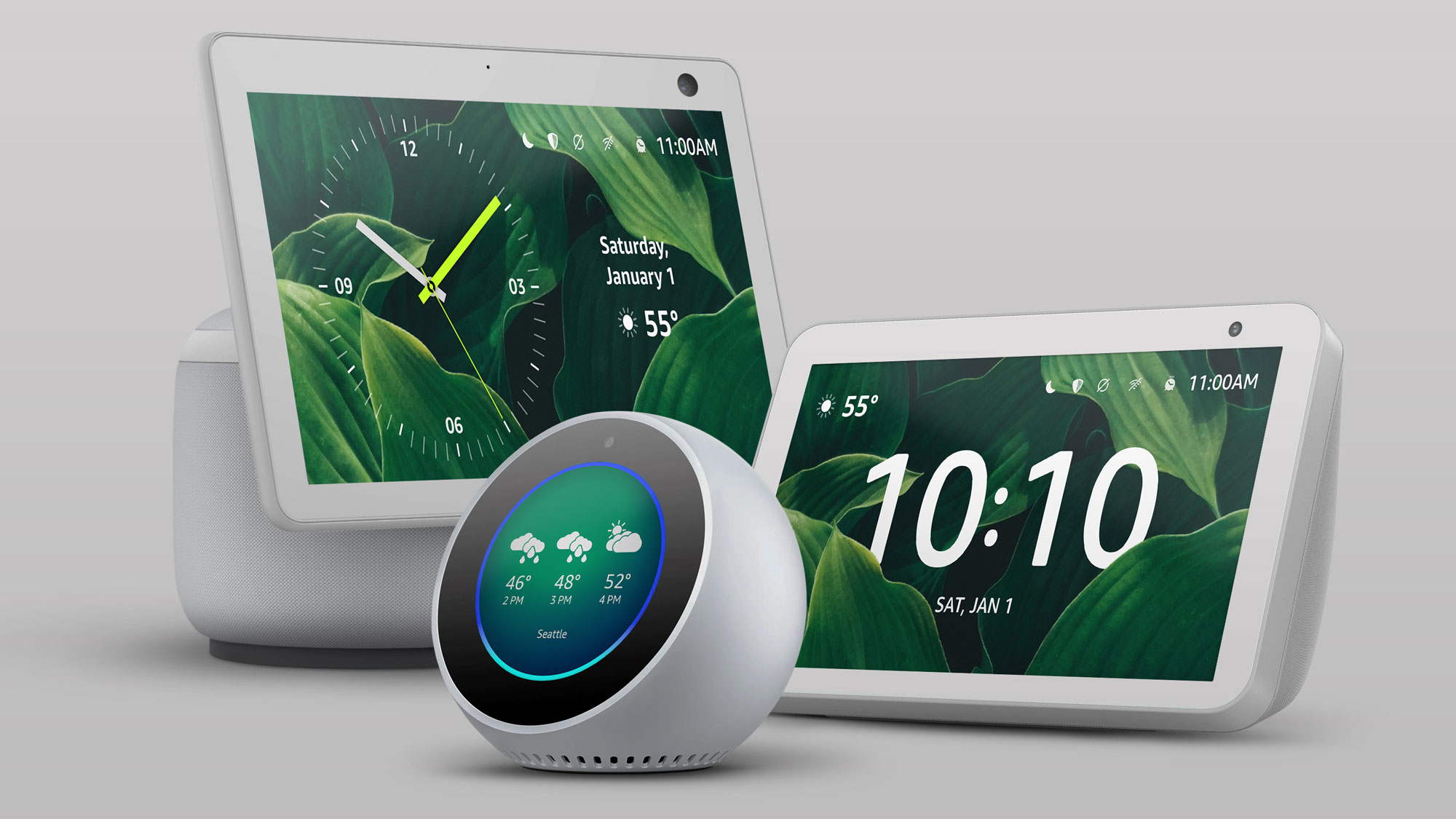
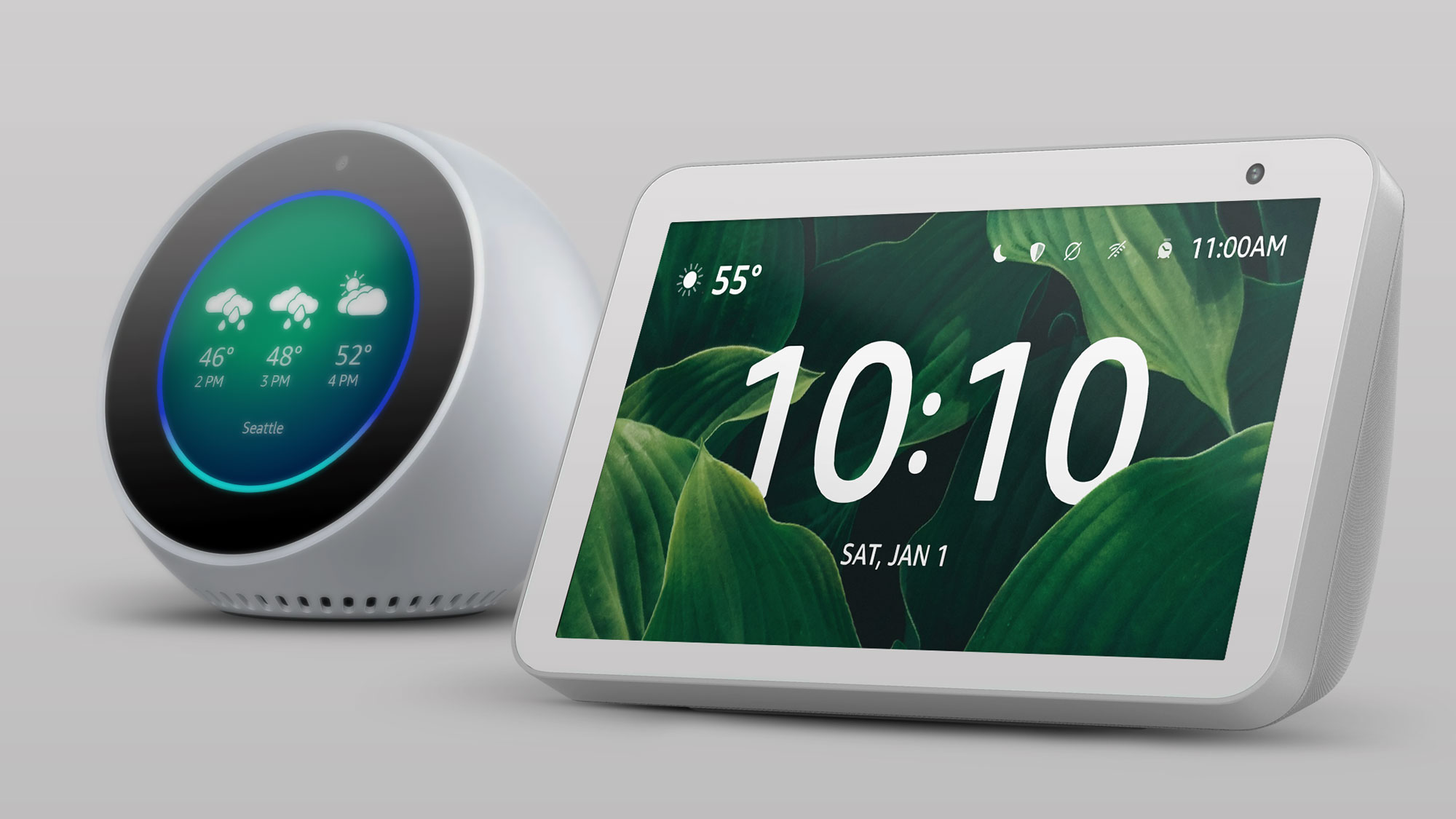
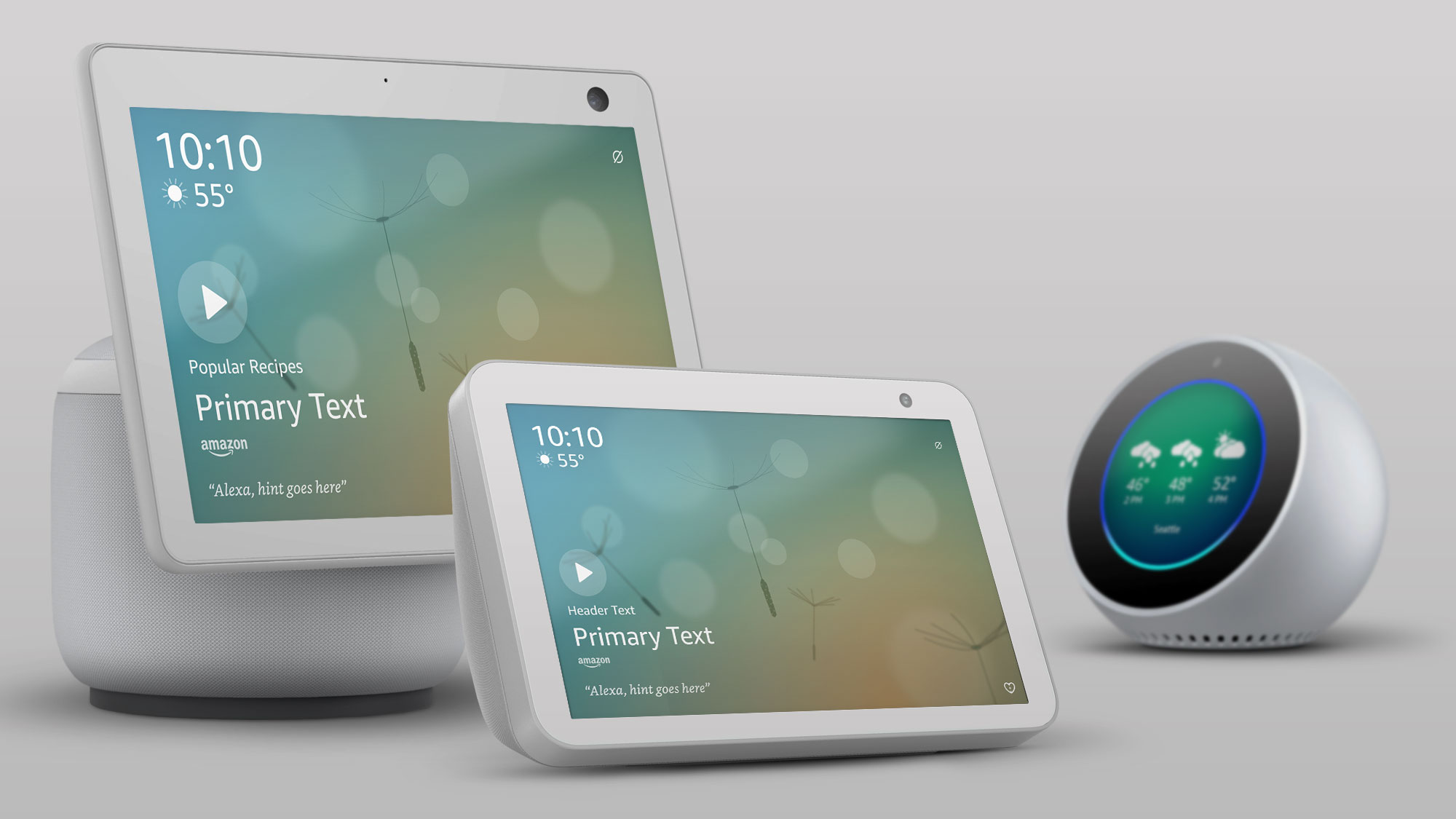
The Echo device family consists os Echo Spot, legacy Echo Show, and new generation tablet-style Echo Show devices. My responsibilities for the Echo design systems included migrating the libraries from Sketch to Figma, maintaining the expansive Echo clock library, patterns, and templates, and creating and maintaining the OOBE onboarding library.
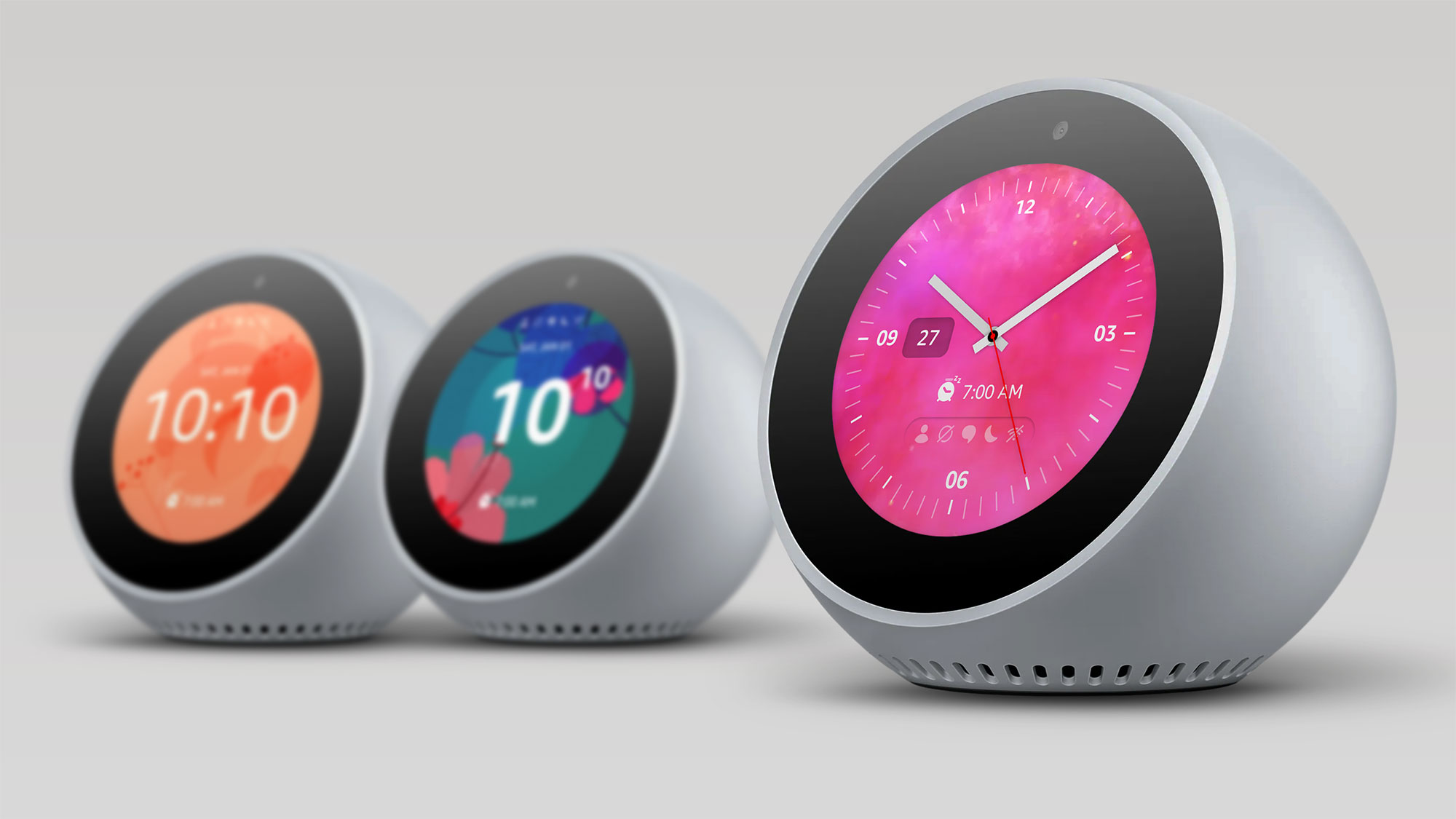
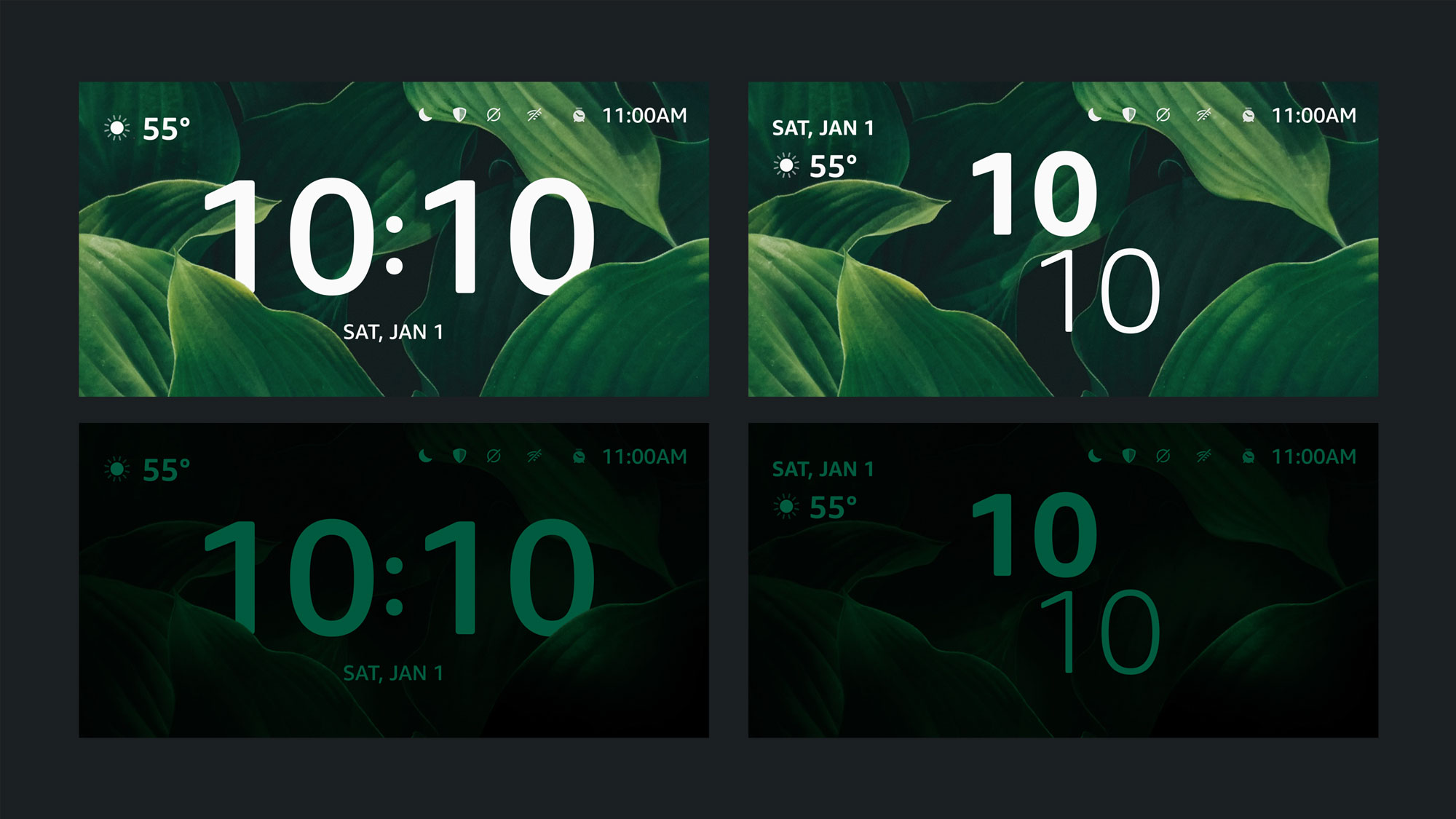
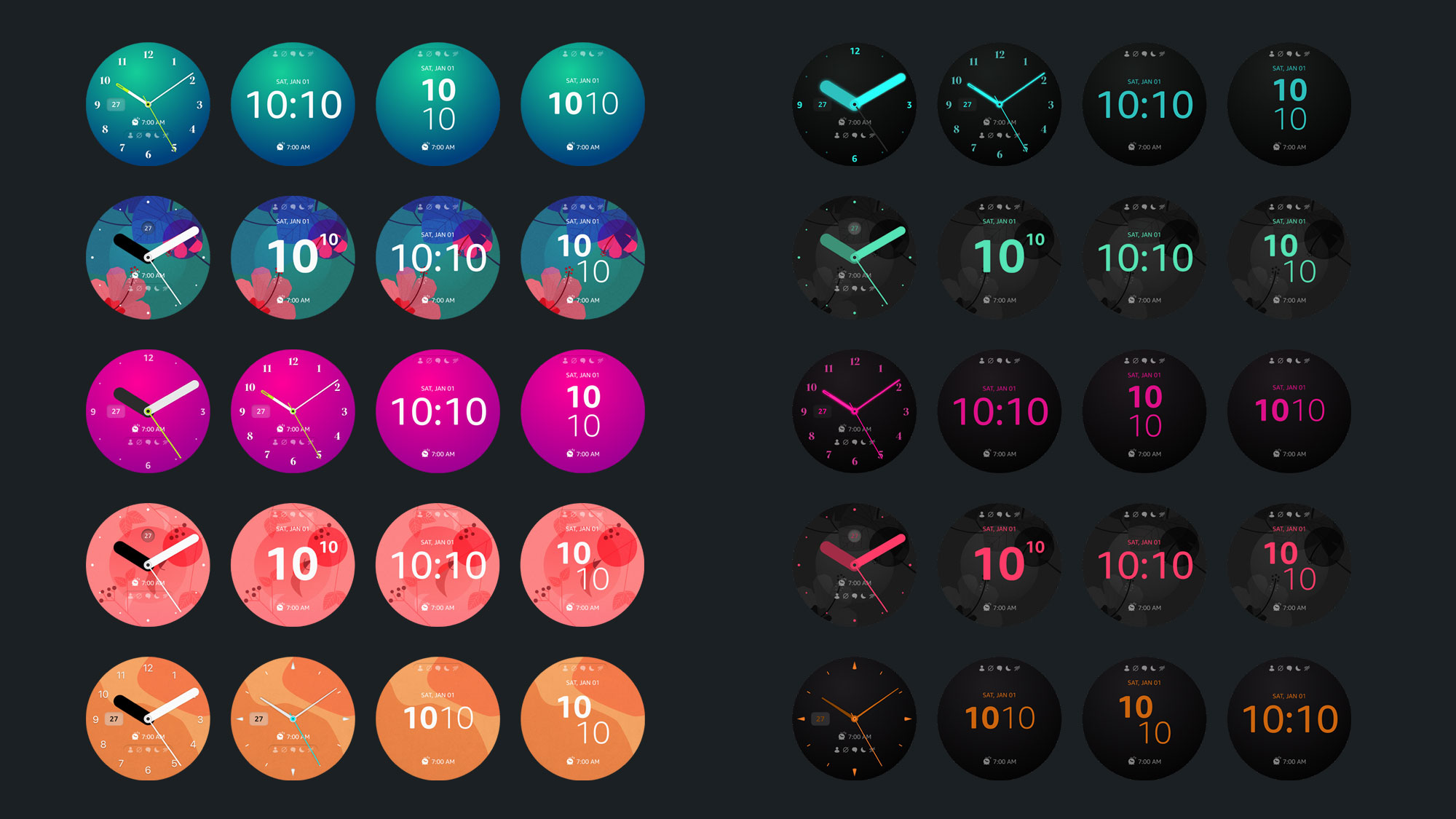
Some Echo devices include thousands of clock layout permutations, with settings for clock-face styles, backgrounds, color theming, and more. Below is a sampling of the clock library and templates for Echo Spot, Echo Show 8, and Echo Show 10.
Echo Show 8 clock library sampling // Device mockup
⇆
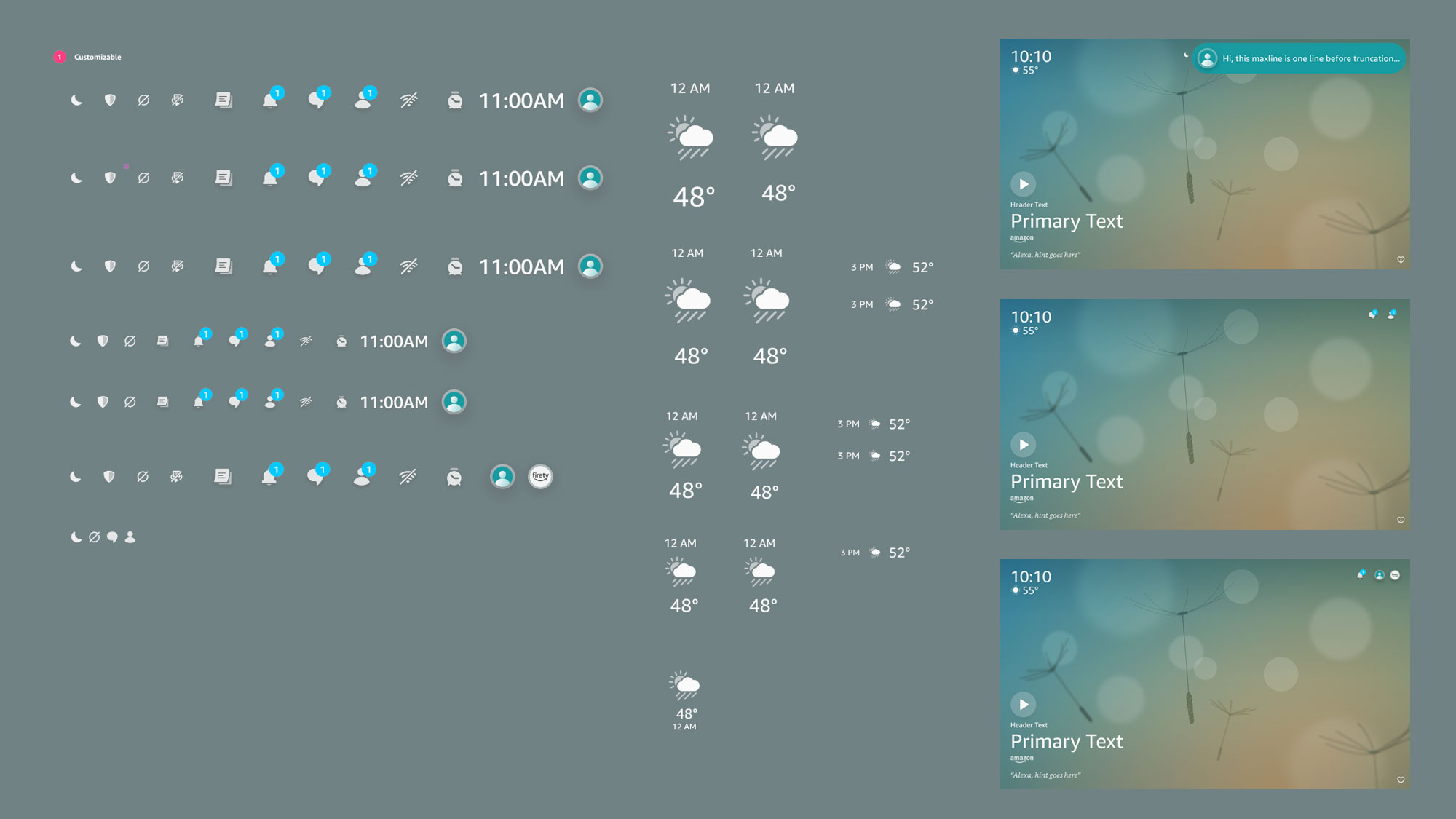
Echo Show 8, 10 mockups // Atomic components and template samplings
⇆
Echo Spot clock library sampling // Device mockup
⇆
Echo clock library documentation & specs
The following is a sampling of the docs and specs I created for engineering handoff. With all systems, we chose to house documentation within Figma with live nested components, as opposed to screenshots. This way, when components are updated, the specs are automatically updated as well. Dev Mode was later integrated into the handoff process, which was made easier with docs that were already housed within Figma.
Adoption success
The creation of the Fire TV design systems were part of a department-wide migration to Figma. Previously, CX teams managed their own design systems on various platforms, which created chaos and disharmony for designers and engineers. As such, Amazon made the decision to migrate (or recreate from scratch) all device design systems in Figma to form a more harmonious ecosystem that brought consistency to design, and parity to code. Thus, the “Bridge Team” was formed, consisting of 9 system designers, including myself, who migrated or recreated, owned, managed, and supported all device design systems, documentation, and template libraries – approximately 24 device-specific design systems, plus the core Alexa design system that was a shared responsibility.
Support and training
Once the primary systems were ready for launch with consistent interfaces, and detailed specs and documentation, we launched a comprehensive department-wide adoption and support campaign consisting of a video training library, office hours, intake forms, regular video and newsletter updates, and routine live training sessions. We followed up the campaign with a survey that showed a 78% positive rating of the new design systems themselves, as well as the support efforts from our team.
Positive feedback
0%
Team culture
To further promote and facilitate adoption, we worked to position our team as:
Highly dependable, approachable, and extra helpful. We worked to form good working relationships with our designers and developers by happily assisting, even when requests were outside of our typical scope.
Always supportive with quick turnaround times, attention to detail, and inclusive collaboration. Although it was sometimes difficult, we worked to ensure the shortest turnaround times possible.
Experts in user-centered solutions that reduce cognitive load and make the jobs of our users easier. We extended our support beyond just managing the systems, to consulting and formulating solutions for CX and engineering teams.
The result was a measurable successful adoption across the CX and engineering teams, and a smooth and easy support process. An additional perk of our support efforts was the formation of improved collaboration among the CX teams, themselves, and the breaking down of silos that previously created separation and hindered collaboration.